An example a rep can personalize
Subject: Q-1842 — approval drawing for your pump assembly. “Hi Morgan, you mentioned that maintenance needs to verify the mounting dimensions. Would the assembly drawing help with that review? Reply with the revision your engineer is using and I’ll send the matching sheet.” Before sending, the rep checks that the quoted product is still available and the drawing is approved for that customer.
Read the reply as a sales signal
“Please send the drawing” calls for an engineering handoff. “We moved the shutdown to August” calls for a revised follow-up date. “We placed the order” calls for closing the sequence. Capture that distinction in the quote record so the next email reflects the buyer’s answer.
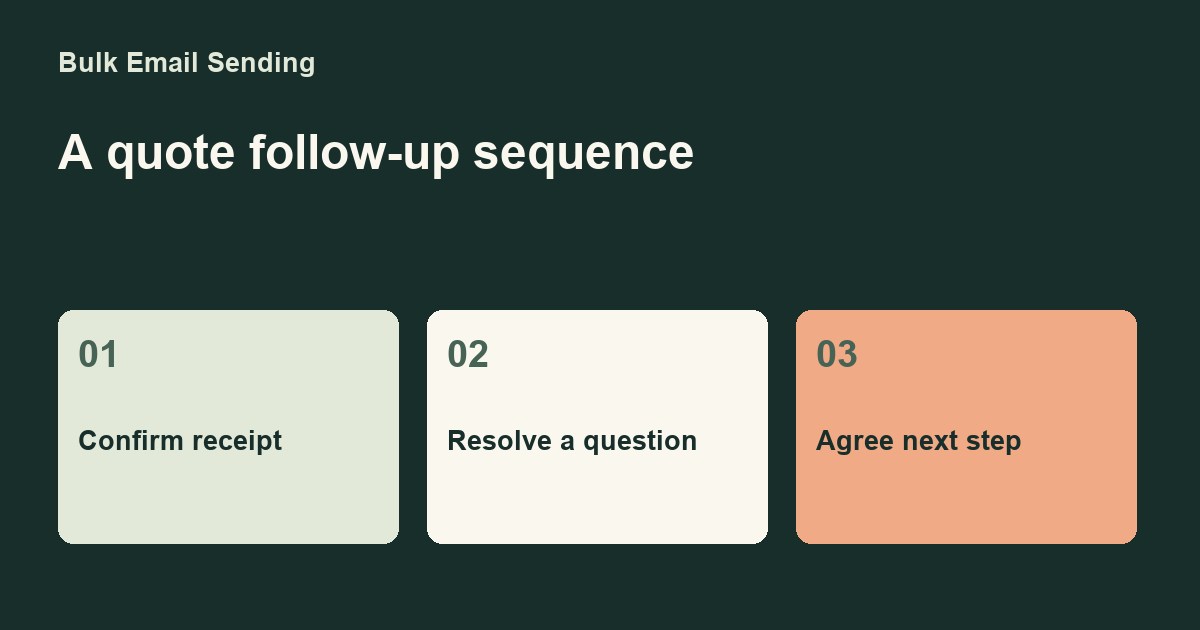
First touch: confirm the buying details
Use the quote reference and actual component in the subject. For example, “Q-1842 · replacement pump assembly.” In the body, ask one question: “Does the quoted assembly match the duty point your engineer approved?” Include the rep’s reply address and the current quote document.
Second touch: remove a buying obstacle
After the agreed review window, check the opportunity stage. If the buyer still needs internal sign-off, offer the drawing, lead-time confirmation or alternate specification they asked for. A useful line is “Would a dimensional drawing help your maintenance lead approve the replacement?” Confirm current lead time before sending.
Final touch: let the buyer choose
Ask whether the project is active, deferred or closed. Record the answer in the CRM. A reply, purchase order or change of quote owner should stop the sequence. Review quotes that progressed to an order alongside a similar set of opportunities that did not receive the sequence.
Choose the next question from the quote record
Open the most recent revision before drafting the message. Check the part number, quantity, quoted lead time, validity date and contact who asked for it. Look for a specific unresolved decision in the notes. If the buyer already approved the dimensions on a call, asking them to approve the dimensions again wastes the next opportunity to learn what is holding up the order.
Example. A maintenance lead requested a price for one replacement assembly. Procurement later asked for the cost of keeping a second unit as a spare. The next useful question is whether the buyer needs separate line items for installation and stores. A general request for an update leaves the buyer to explain the entire purchasing process again.
Write for the person who must answer
A design engineer may need a drawing with a revision number. A procurement contact may need freight terms, a supplier reference or an expiry date they can put on a purchase request. A plant manager may need a confirmed delivery window before booking downtime. Address the person already involved and offer the document that advances their decision. Let that person decide who else should receive material specific to their account.
Example wording for procurement. “Hi Morgan, the current quote covers the installed unit and the spare together. Would separate line items help you raise the purchase request? I can issue a revised copy under the same quote reference.” Before sending, confirm the rep can make the promised revision and that someone owns the next response.
Handle an expired quote without surprising the buyer
If the quote has expired, check internally which details need another approval. Freight, material cost and available production time may each have a different owner. Tell the buyer what you can confirm now and when you expect the remaining answer. A follow-up that repeats an old price beside a fresh date can create an expectation the shop cannot meet.
Example wording. “Your review is scheduled for next week. The earlier freight amount was valid through Friday. Would you like an updated delivered price for the same quantity and destination?” Save any revised quote against the original opportunity. Mark the old document as superseded wherever the sales team normally finds it.
Review the sequence with the sales desk
Read a sample of replies together. Count how many asked for a technical detail, reported a deferred project, placed an order or requested no further contact. Group the results by quote stage before deciding which message to change. If several buyers request the same missing drawing, include an approved version with the initial quote when appropriate. If customers consistently answer that their project starts next quarter, adjust the timing recorded on those opportunities. Those changes give reps a concrete reason to follow up and give buyers fewer repeated questions to answer.
 Bulk Email Sending